
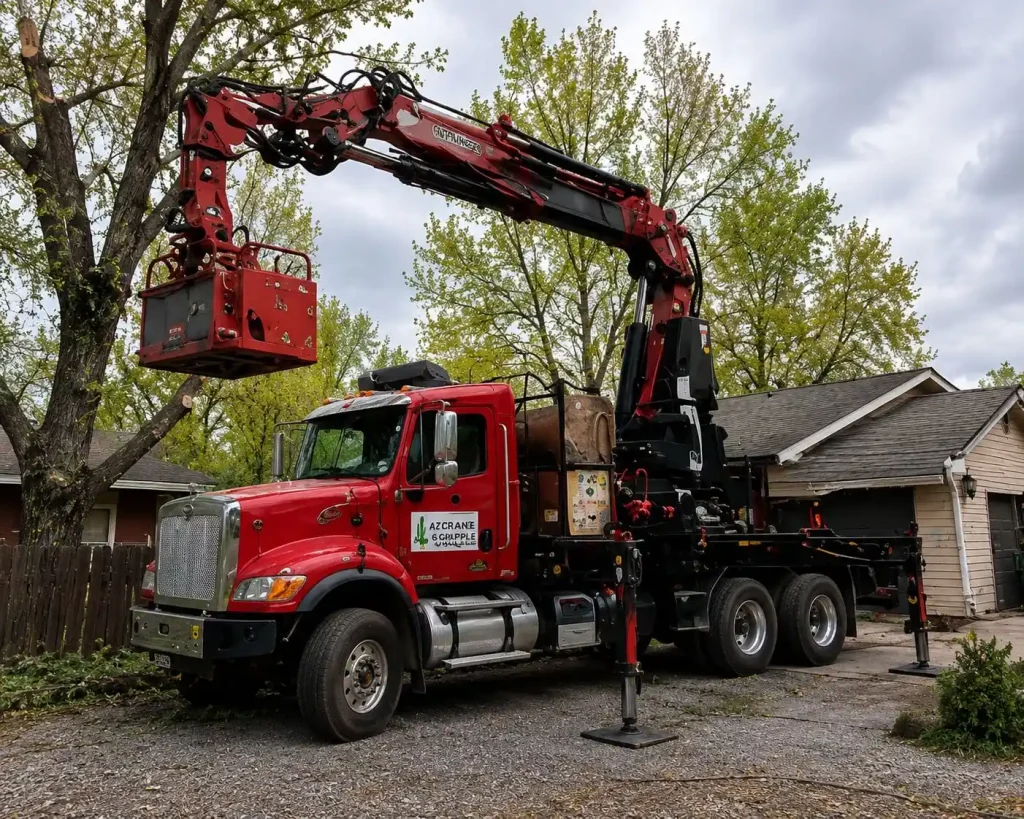
Phoenix monsoon season brings powerful storms that can leave your property in rough shape. High winds, heavy rain, and violent gusts uproot trees, snap large limbs, and scatter debris across yards, driveways, and structures. When the storm passes, the cleanup challenge begins — and it is often bigger than it looks.
That is where crane tree removal becomes essential. Standard tree crews simply cannot safely handle every post-monsoon situation. Large uprooted trees near homes, limbs hanging over pools, and root balls lodged against fences all require precision, heavy lifting equipment, and trained operators to manage safely.
Arizona Crane & Grapple serves Phoenix and surrounding communities with professional crane-assisted tree removal, grapple truck services, and storm cleanup. If a monsoon left a dangerous tree or heavy debris on your property, read on to learn exactly how crane removal works — and when to call for help.
Why Monsoon Storms Create Serious Tree Hazards
Arizona’s monsoon season runs roughly from June through September. During this period, intense storms roll through the Phoenix area with little warning. Wind gusts can reach extreme speeds, and the rain saturates soil that is normally dry and compact.
That combination is especially dangerous for trees. Additionally, Arizona’s desert soil does not anchor deep root systems as well as wetter climates do. Therefore, even a healthy-looking tree can topple when saturated ground loosens its roots during a storm.
Common Post-Monsoon Tree Damage
After a monsoon, property owners across Scottsdale, Mesa, Tempe, and Chandler frequently deal with the same types of tree damage:
- Fully uprooted trees leaning against homes, fences, or vehicles
- Large broken limbs hanging overhead or resting on roofs
- Split trunks still partially attached and unstable
- Root balls lifted out of the ground and pressed against structures
- Multiple downed trees tangled together and blocking access
Many of these situations are too dangerous for standard tree crews. Moreover, attempting removal without proper equipment risks further structural damage and serious injury.
What Is Crane-Assisted Tree Removal?
Crane-assisted tree removal uses a crane to lift, control, and extract tree sections that cannot be safely cut and dropped in place. An experienced operator positions the crane above or beside the tree. Then, riggers attach cables or rigging to the tree or limbs before cutting begins.
This approach gives operators full control of where each section goes. As a result, heavy limbs and trunks can be precisely lifted away from rooftops, power lines, pools, and other structures without causing additional damage.
When a Crane Is the Right Tool
Not every tree removal requires a crane. However, certain post-monsoon scenarios make crane removal the only safe and practical option:
- Trees leaning on or against a structure
- Large trees with no clear drop zone nearby
- Trees tangled in power lines or near utility equipment
- Uprooted trees with heavy root balls blocking driveways or walkways
- Trees located in tight spaces where ground crews cannot safely work below
- Commercial properties with equipment, inventory, or landscaping at risk
In these situations, crane tree removal protects your property and keeps everyone on the crew safe. Furthermore, it speeds up the job considerably compared to manual piece-by-piece cutting from the ground.
How Arizona Crane & Grapple Handles Post-Monsoon Cleanup
At Arizona Crane & Grapple, the post-monsoon process starts with a thorough site assessment. Our experienced operators evaluate the tree’s position, weight, condition, and proximity to structures or utilities. Then, they select the appropriate equipment and plan the lift carefully before any cutting begins.
Step-by-Step Crane Tree Removal Process
Here is how a typical crane-assisted removal unfolds after storm damage:
- Site assessment: Operators inspect the tree, surrounding structures, and access points.
- Equipment positioning: The crane is set up at a safe distance with proper outrigger support.
- Rigging: Cables and straps are attached to control the tree or limb during the cut.
- Controlled cutting: A climber or ground crew makes precise cuts while the crane holds tension.
- Lift and placement: Each section is lifted clear and lowered to a safe drop zone.
- Debris handling: Our grapple truck moves and loads heavy wood, root balls, and debris for hauling.
Additionally, we bring grapple truck services to every storm cleanup job. This allows our crew to handle massive root balls, heavy log sections, and tangled debris that would otherwise require multiple trips with standard equipment.
Grapple Trucks: The Perfect Storm Cleanup Partner
A grapple truck uses a hydraulic claw-like arm to grab, lift, and load heavy material without manual handling. After a monsoon, this is invaluable. For example, a fully uprooted palm tree with a large root ball can weigh thousands of pounds. A grapple truck picks it up efficiently and loads it for haul-off in a fraction of the time manual labor would take.
Together, the crane and grapple truck form a complete storm damage solution — from precision removal to full debris clearing.
Protecting Your Property During and After Monsoon Season
The best time to address tree hazards is before a storm hits. Therefore, Arizona homeowners and property managers should inspect their trees each spring before monsoon season begins. Look for signs of stress, disease, dead branches, or shallow root systems that could fail in high winds.
Pre-Monsoon Tree Safety Tips
- Have large or mature trees assessed by a qualified professional each year.
- Remove dead or weakened limbs before storm season.
- Identify trees close to your home, pool, fence, or utility lines that may pose a risk.
- Keep records of any trees that show signs of disease or structural weakness.
- Know who to call if a tree comes down — have Arizona Crane & Grapple’s number ready: (480) 470-1604.
Meanwhile, if you missed pre-season prep and a storm has already hit, do not attempt to move or cut a large downed tree yourself. Instead, keep family and pets away from the area and call a professional immediately.
After the Storm: What to Do First
Once the monsoon passes and it is safe to go outside, take these steps before doing anything else:
- Do a visual walk-around from a safe distance — do not get close to downed trees or hanging limbs.
- Check for any contact with power lines and call your utility company if wires are involved.
- Document the damage with photos for your insurance provider.
- Call Arizona Crane & Grapple at (480) 470-1604 to schedule a fast site assessment and estimate.
Because storm events affect many properties at once, early calls get faster scheduling. Call us at (480) 470-1604 to schedule service before your area’s post-storm demand peaks.
Serving Phoenix and the Greater Arizona Area
Arizona Crane & Grapple is locally operated and responds to storm damage calls across the Phoenix metro and beyond. We regularly serve residential and commercial properties in Scottsdale, Mesa, Tempe, Chandler, Gilbert, and communities throughout Arizona.
Whether you are a homeowner dealing with a single uprooted tree, a commercial property manager clearing a storm-damaged parking area, or a rural landowner with multiple downed trees blocking access roads, we have the equipment and experience to handle it. Furthermore, our team understands the unique challenges Arizona’s desert environment creates — from rock-hard caliche soil to massive saguaro removal near structures.
No job is too large, too awkward, or too dangerous for our crane and grapple crews. We handle the situations that standard tree or hauling companies simply cannot manage safely or efficiently.
Frequently Asked Questions About Post-Monsoon Crane Tree Removal
How soon can Arizona Crane & Grapple respond after a monsoon?
We prioritize emergency and storm damage calls. Response times depend on volume after a major storm event, but we work to get to your property as quickly as possible. Call (480) 470-1604 right away to get on the schedule.
Is crane tree removal safe near my home or pool?
Yes — that is exactly why crane removal is used in these situations. The crane controls each section during the lift, so limbs and trunks are never dropped near your structure. Our operators plan every lift precisely to protect surrounding property.
Will the crane damage my lawn or driveway?
Our operators use outrigger pads and plan crane placement carefully to minimize ground disturbance. We take property protection seriously on every job. Talk with your operator during the site assessment if you have specific concerns.
Do you haul away the debris after the removal?
Absolutely. Our grapple truck services handle full debris removal, including heavy logs, root balls, and scattered storm debris. We leave your property clean and clear.
How do I know if my tree needs a crane or standard removal?
The best way to know is to have our team assess the site. Generally, if the tree is large, near a structure, has no safe drop zone, or is tangled with other debris, crane removal is the right choice. We will give you an honest recommendation based on the actual conditions.
Get Fast, Professional Storm Cleanup from Arizona Crane & Grapple
Monsoon storms move fast, and so does the need for safe tree removal after they hit. Do not let a dangerous downed tree sit on your property longer than necessary. Every hour a hazardous tree leans against your home or hangs over your yard is a risk to your safety and your property.
Arizona Crane & Grapple delivers professional crane tree removal, grapple truck services, and complete storm cleanup for Phoenix-area homeowners, businesses, and rural landowners. Our experienced operators use specialized equipment to handle the toughest post-monsoon tree removal challenges safely and efficiently.
Ready to get started? Contact Arizona Crane & Grapple today to request a fast estimate and protect your property with the professional crane and grapple services Arizona trusts.
Article created by Atomic Social Workspace.